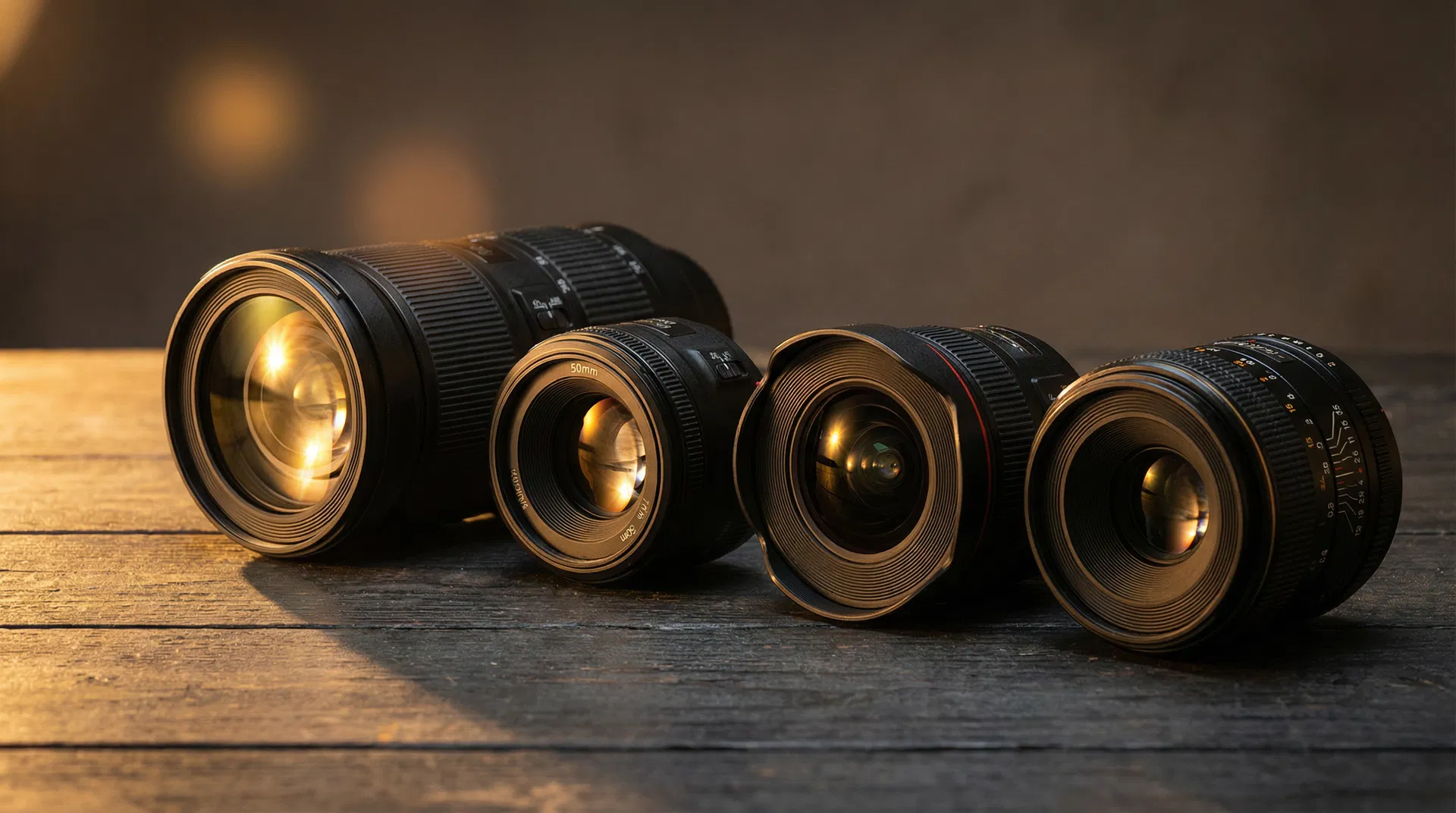
The lens is the most important factor in determining the quality and character of your images. Many photographers discover, often after buying several cameras, that upgrading lenses has more impact than upgrading camera bodies. This guide explains everything you need to know to choose the right lens in Singapore.
Why the Lens Matters More Than the Camera Body
Camera sensors improve with every generation, but the optical fundamentals of lens design have remained constant for over a century. A sharp, well-designed lens on an older camera body will outperform a mediocre lens on the latest camera body. When you invest in a quality lens, that investment carries forward when you upgrade your camera body. Lenses do not become obsolete in the same way that camera bodies do.
Understanding Focal Length
Focal length, measured in millimetres, determines how wide or how zoomed in your view is.
- Wide angle lenses (14mm to 35mm): These lenses capture a wide view of the scene. They are ideal for landscape photography, architecture, interior spaces, and environmental portraits where you want to show context. Wide angle lenses exaggerate perspective, making foreground subjects appear larger relative to the background.
- Standard lenses (35mm to 70mm): The 50mm focal length is often described as the most natural perspective because it approximates what the human eye sees. Standard lenses are versatile and work well for street photography, documentary, and everyday shooting.
- Telephoto lenses (70mm to 400mm and beyond): Telephoto lenses compress perspective and bring distant subjects closer. They are essential for wildlife photography, sports, events where you cannot get close to the subject, and portraiture where you want beautiful background blur and flattering compression of facial features.
Understanding Aperture
Aperture refers to the opening inside the lens that controls how much light enters. It is measured in f-stops. A lower f-number means a wider aperture.
- Wide aperture (f/1.2, f/1.4, f/1.8, f/2.8): Allows more light, making these lenses better in low light conditions. Also creates a shallow depth of field, meaning the subject is sharp and the background is blurred. This effect, known as bokeh, is popular in portrait photography.
- Narrow aperture (f/5.6, f/8, f/11): Less light enters, but more of the scene is in focus from foreground to background. Ideal for landscapes where you want everything sharp.
Which Lens Should You Buy for Your Use Case?
- For portrait photography: A 50mm or 85mm prime lens with a wide aperture of f/1.8 or f/1.4 will give you sharp subjects with beautiful background blur. The Canon EF 50mm f/1.8 STM is one of the best value lenses available and is compatible with Canon EOS DSLRs.
- For travel photography: A versatile zoom lens covers the widest range of situations without carrying multiple lenses. A 24-70mm f/2.8 or an 18-135mm kit zoom handles landscapes, street scenes, and casual portraits in one package.
- For wildlife and sports: A telephoto zoom in the 100-400mm or 70-300mm range is essential. These lenses allow you to photograph birds, animals, and sports action from a distance without disturbing the subject.
- For video and vlogging: A wide aperture lens with smooth, silent autofocus is ideal. Avoid lenses that breathe noticeably when focusing, as this creates a distracting zoom effect in video footage.
- For street photography: A compact 35mm or 28mm prime lens is the classic choice. Small enough not to draw attention, wide enough to capture scenes with context, and sharp enough for demanding editorial use.
Prime Lenses vs Zoom Lenses
A prime lens has a fixed focal length. You cannot zoom. You must physically move to change your composition. In return for this limitation, prime lenses typically offer wider maximum apertures, sharper optics, and smaller, lighter bodies than equivalent zoom lenses.
A zoom lens covers a range of focal lengths in one lens. This makes them more versatile but generally heavier and with narrower maximum apertures than primes at the same price point.
Lens Compatibility in Singapore: What You Need to Know
Before buying any lens, confirm it is compatible with your camera. Lens mounts vary by brand and sometimes by camera generation within the same brand. Canon EF lenses work on Canon EOS DSLRs. Canon RF lenses work on Canon EOS R mirrorless cameras. Panasonic L-mount lenses work on the Lumix S series. Using an incompatible lens requires an adapter and may limit autofocus performance.
Where to Get Lens Advice in Singapore
Alan Photo has been advising Singapore photographers and creators on lens choices since 1986. Our staff understand the full range of Canon, Panasonic, and other lenses we stock and can help you find the right focal length, aperture, and budget balance for your specific shooting style. Visit either of our two Singapore stores to see and handle lenses before you buy.
Frequently Asked Questions
What is the best first lens for a beginner in Singapore?
The kit lens that comes bundled with a camera (typically an 18-55mm zoom) is a solid starting point. Once you want to specialise, a 50mm f/1.8 prime lens is the most recommended first upgrade.
Is it worth buying a more expensive lens than my camera body?
Yes, in many cases. A high-quality lens on a mid-range body often produces better results than a poor-quality lens on a top-of-the-line body. Lenses are a long-term investment.
Can Alan Photo help me find compatible lenses for my camera?
Yes. Bring your camera into either Alan Photo store in Singapore and our staff will help you identify compatible lenses within your budget.